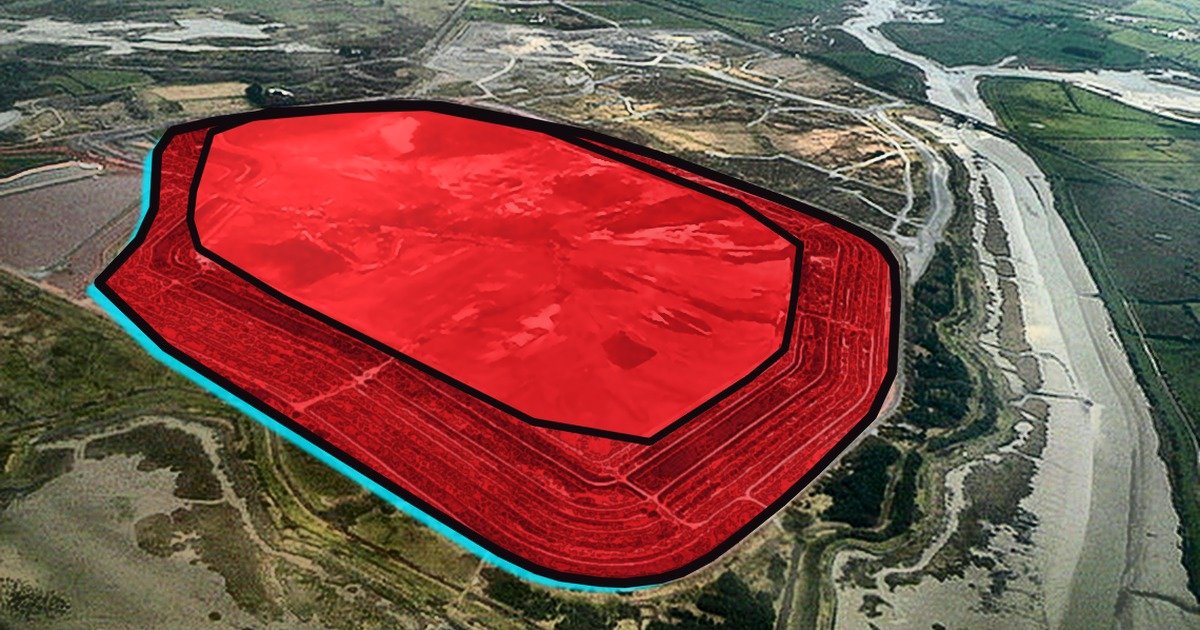
The red pond
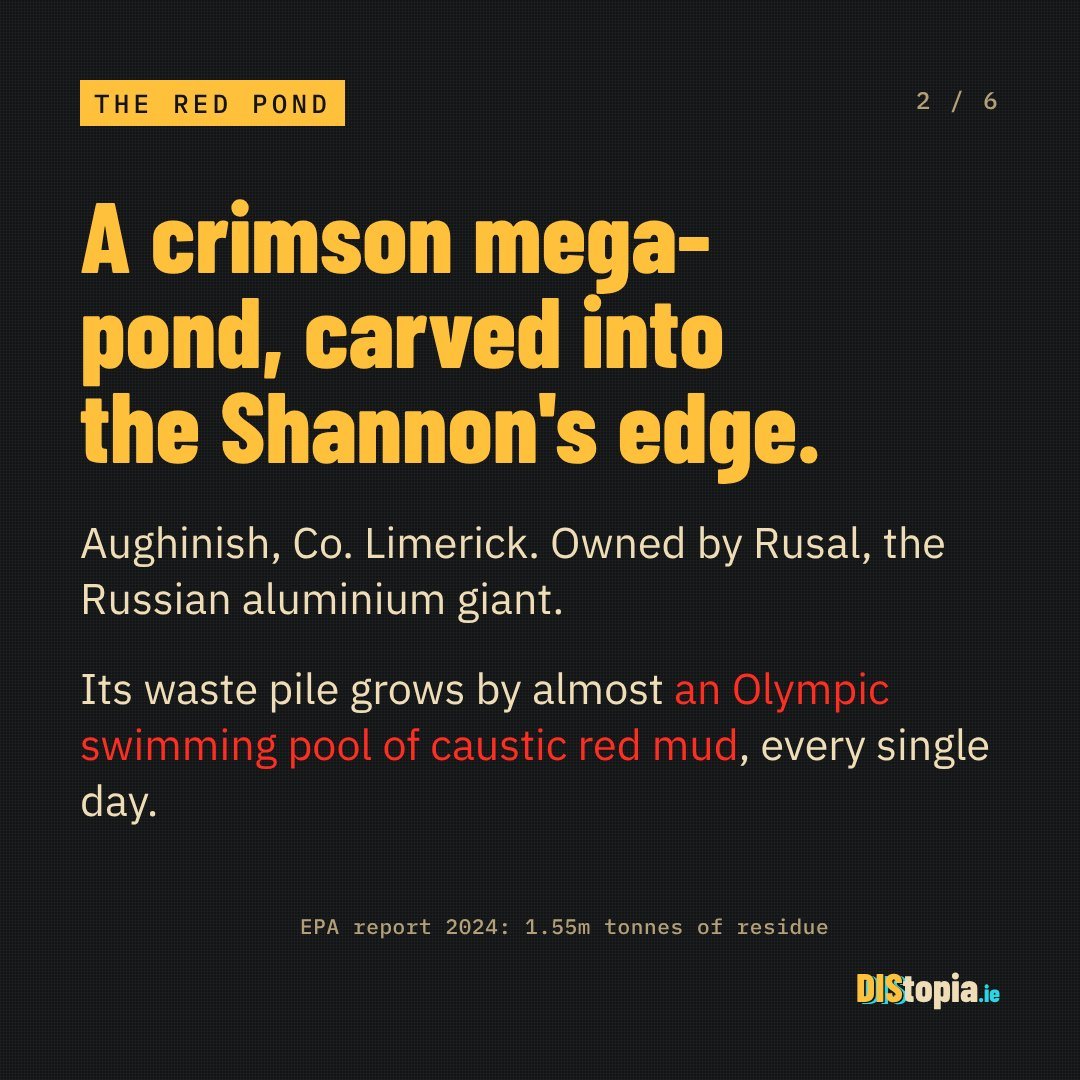
From the air, you can't miss it. A striking crimson mega-pond on the edge of the Shannon estuary.
It's bauxite residue, or "red mud", the waste left over from refining alumina at Aughinish, County Limerick.
In 2024 the plant added 1.55 million tonnes of it.1
That's almost an Olympic swimming pool of caustic red mud, every single day.
In March 2025, it got permission to expand the pile so the refinery can run until 2039.2
In the same week that dozens of European leaders gathered in Dublin to discuss support for Ukraine, a 120-metre cargo ship called the Karin sat moored beside the plant. Then it sailed for Russia, loaded with alumina.3
The plant is owned by Rusal, the Russian aluminium giant. Since the invasion, the EU has banned a long list of trade with Russia, from luxury goods to aircraft parts.16 Alumina isn't on it.3
Two hands
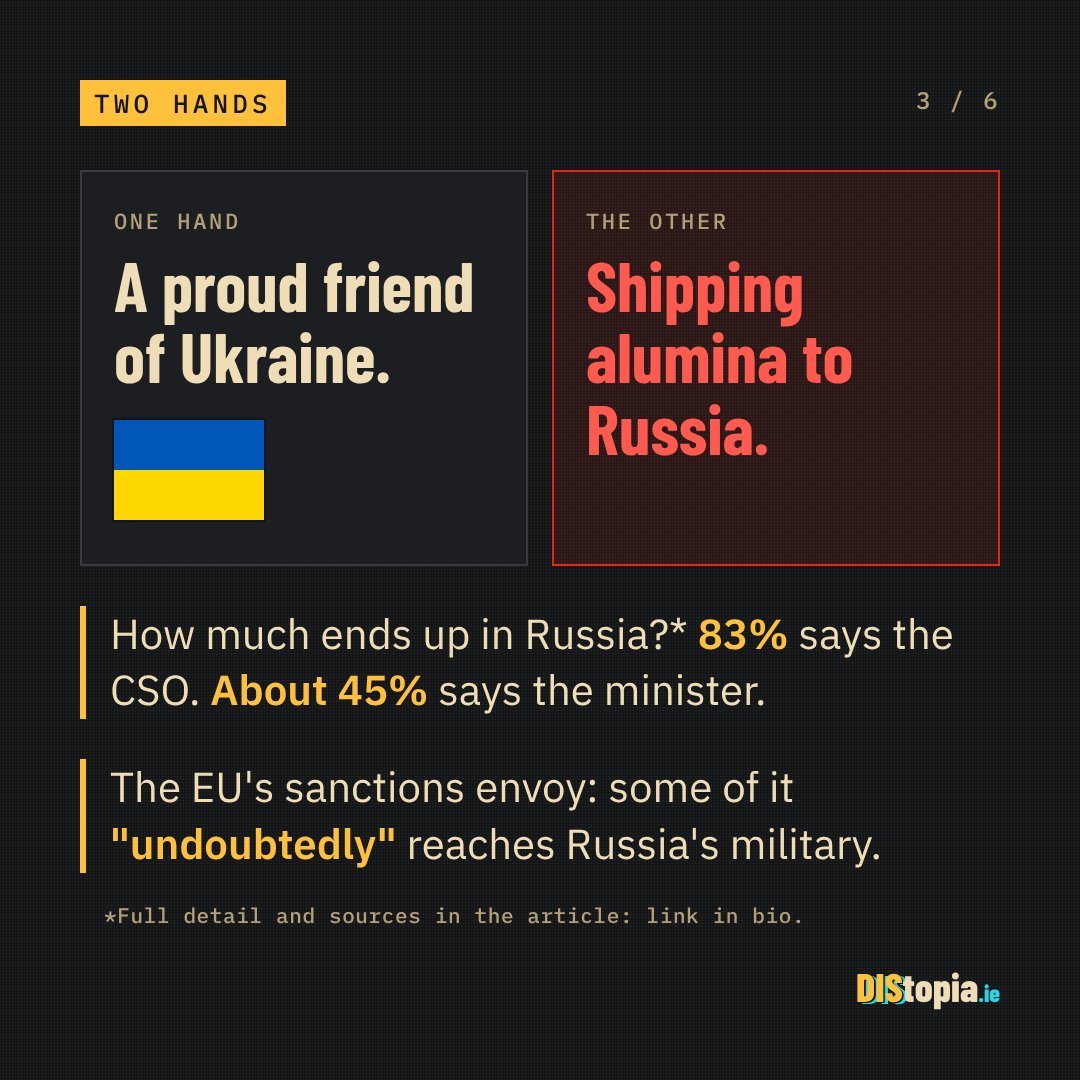
With one hand, Ireland is a proud friend of Ukraine, and has stood by it since the full-scale invasion. We welcomed President Zelensky on 1 July 2026.4 More than 124,000 Ukrainians have been registered here under the EU's Temporary Protection Directive, and over 85,000 still show up in official records.5
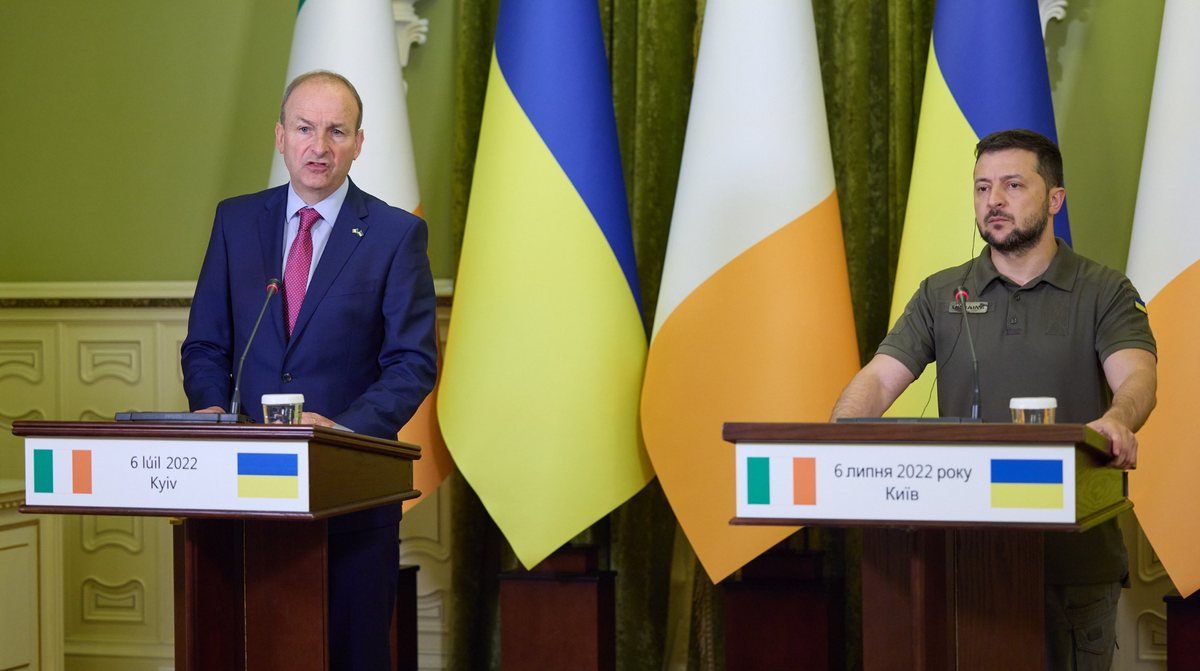
But with the other hand, we keep a Russian-owned refinery running, shipping alumina straight to Russia.
The share that ends up in Russia varies, depending on who you ask. In the first quarter of this year, the CSO said 83%. The Enterprise Minister, Peter Burke, said around 45%.6
The government investigated. It says there's "absolutely no evidence" the alumina reaches Russia's military, even though Russia is fighting a full-scale war. But it won't publish what it found.3
Even Burke admits there's no proof the alumina isn't ending up in Russia's military.7
In October, the EU's sanctions envoy said Aughinish alumina "undoubtedly" ends up, at least in part, supplying Russia's military industry.8
We've seen this before
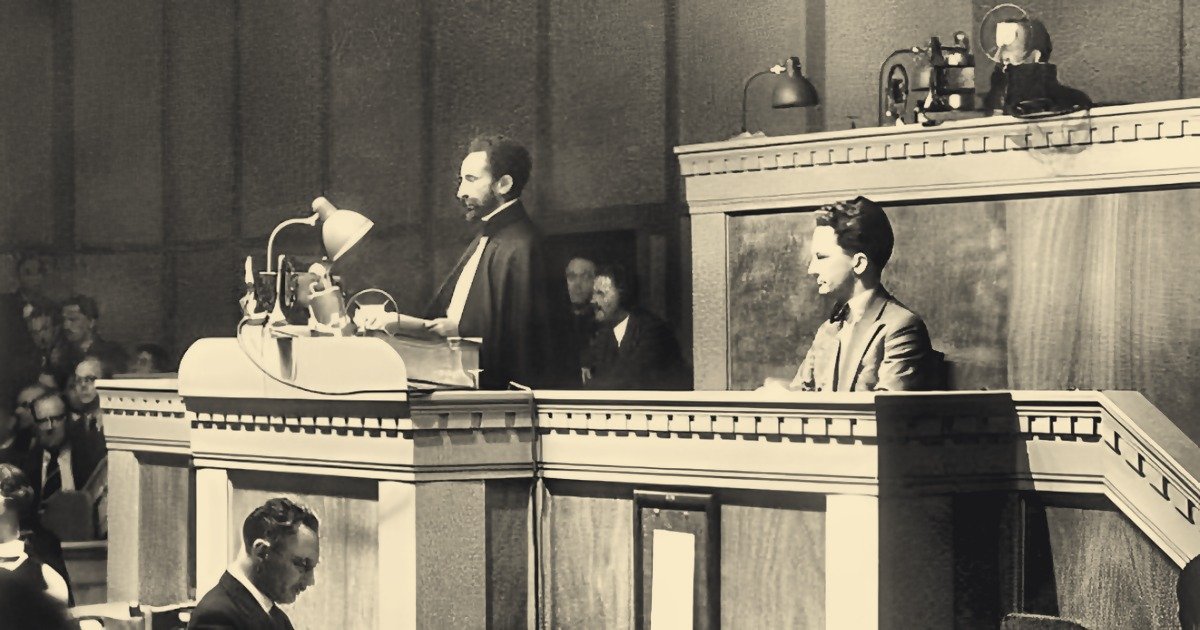
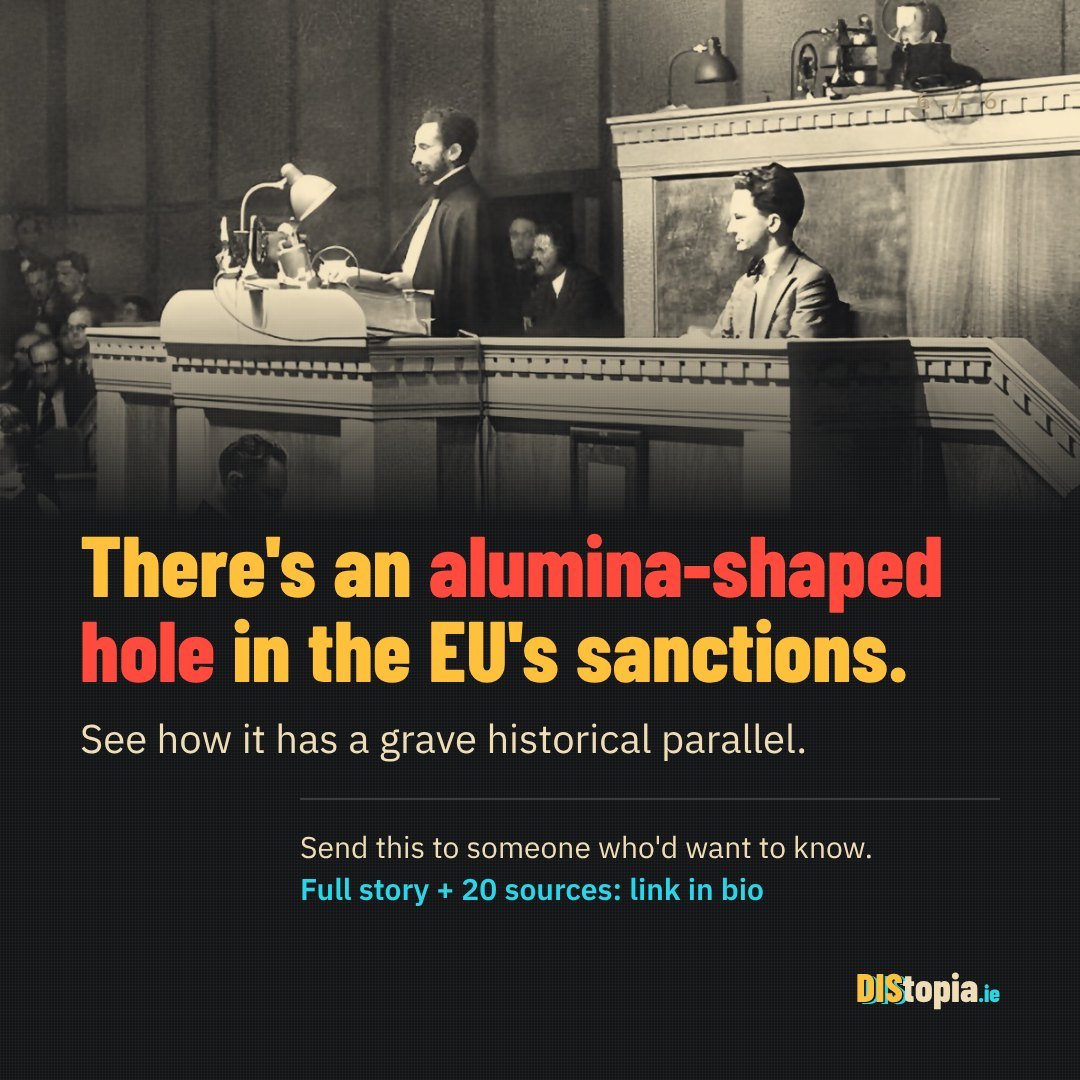
In 1935, Mussolini's Italy invaded Abyssinia, now Ethiopia. The League of Nations, the UN of its day, brought in sanctions against Italy, but left out oil, the one thing Italy needed most for the war.9
The sanctions failed. Oil kept fuelling Italy's conquest of Ethiopia, and the League never recovered its credibility.10 Within a few years, Europe was at war.14
In 2026, the EU's sanctions on Russia leave out alumina.
Apple, again
This isn't the first time Ireland has stood beside a big company.
In 2016, the European Commission ordered Ireland to collect more than €13 billion in back taxes from Apple. The government spent years in court fighting it, to protect Ireland's reputation with big business. It lost in 2024.11
Back then, most of us went along with it.15 This time, we should look at the numbers first.
What does Ireland actually get?
The plant is run by two Irish-registered companies. One, Aughinish Alumina Limited, employs the staff. The other, Limerick Alumina Refining Limited, owns the refinery and sells the alumina. Both file accounts with the Companies Registration Office, and they're free to download.
The staffing company employs around 460 people. The refinery company itself has no employees at all.2 In 2024, the workers' pay came to about €48 million.2 For Askeaton and the surrounding area, those millions are clearly a major part of the local economy.
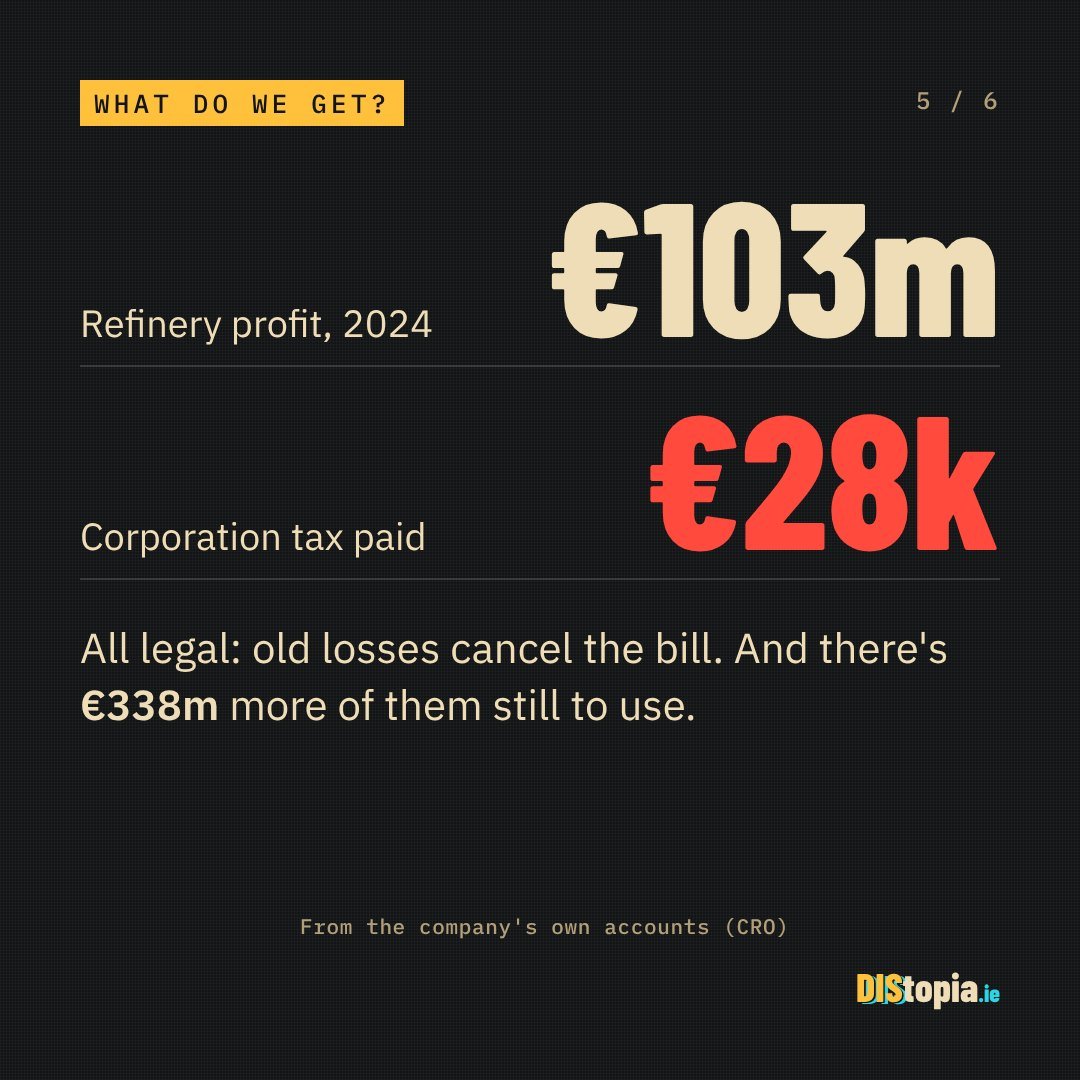
The tax is a different story. Because of losses in earlier years, the refinery paid almost no corporation tax in 2024.2 That's legal, and it's likely to stay that way for years.
The refinery buys its bauxite from other Rusal companies. Until 2025, it also sold all its alumina to Rusal companies.2
So Rusal controlled the price at both ends. And that price decides how much profit stays in Ireland.
The refinery won't say which countries its sales go to. It says that would be "seriously prejudicial" to the company.2
I'm not claiming anything improper. But the law lets a Russian-owned plant keep its customers secret. If it wants to operate here, shouldn't it at least tell us where its alumina goes?
The price of a principle
The Taoiseach called sanctions "self-defeating".12 So I checked what the plant is worth to us.
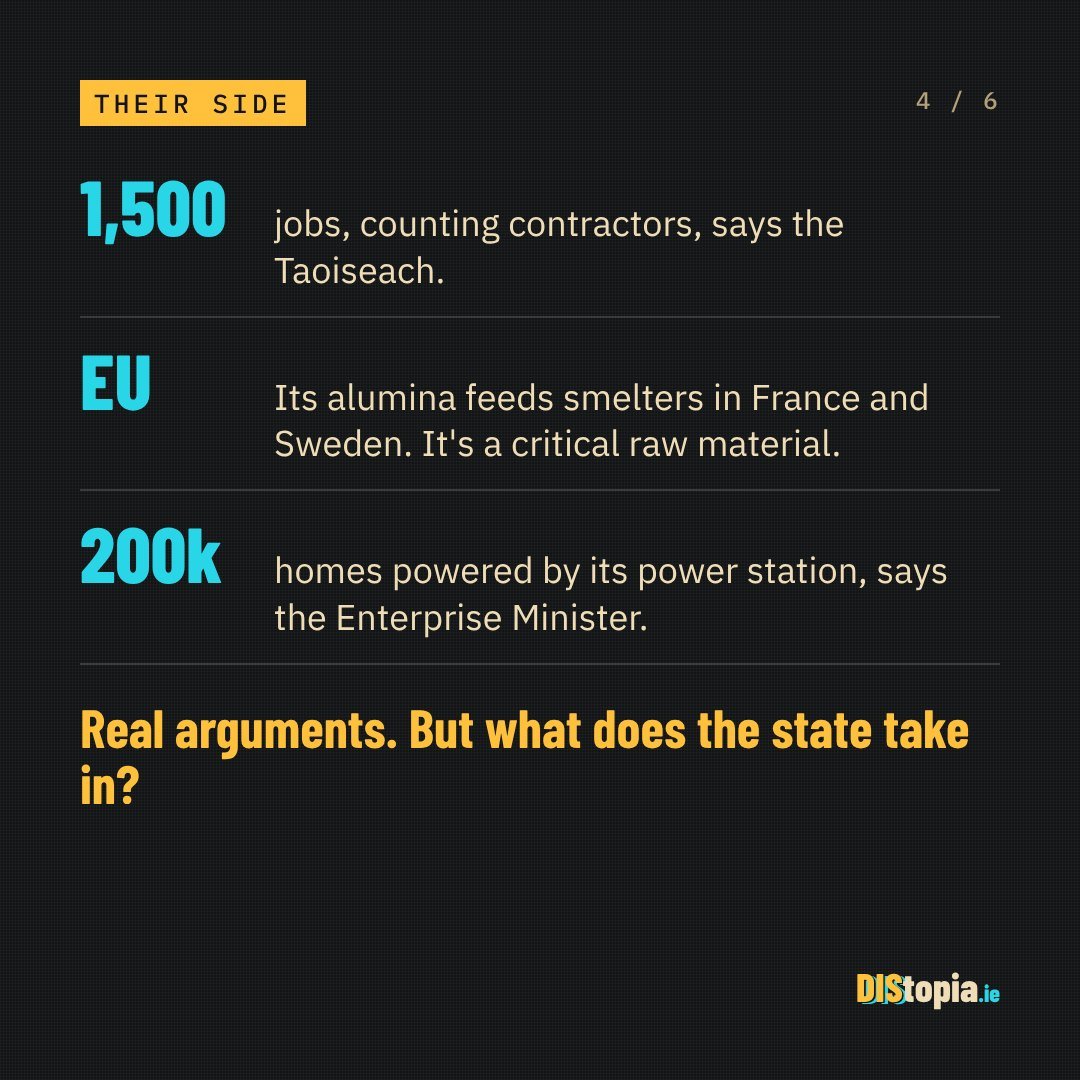
His case deserves a fair hearing. He says sanctions would hurt Europe more than Russia: Aughinish feeds smelters in France and Sweden, alumina is listed as a critical raw material, and cutting it off could push up prices across the EU. He points to up to 1,500 jobs, counting contractors.1819 The Enterprise Minister adds that its power station supplies about 200,000 homes.20 Those are real arguments. But none of them is about what the state takes in. The EU's own sanctions envoy says some of this alumina "undoubtedly" reaches Russia's military.8 Even the Tánaiste says Ireland "can't cherrypick" sanctions.19
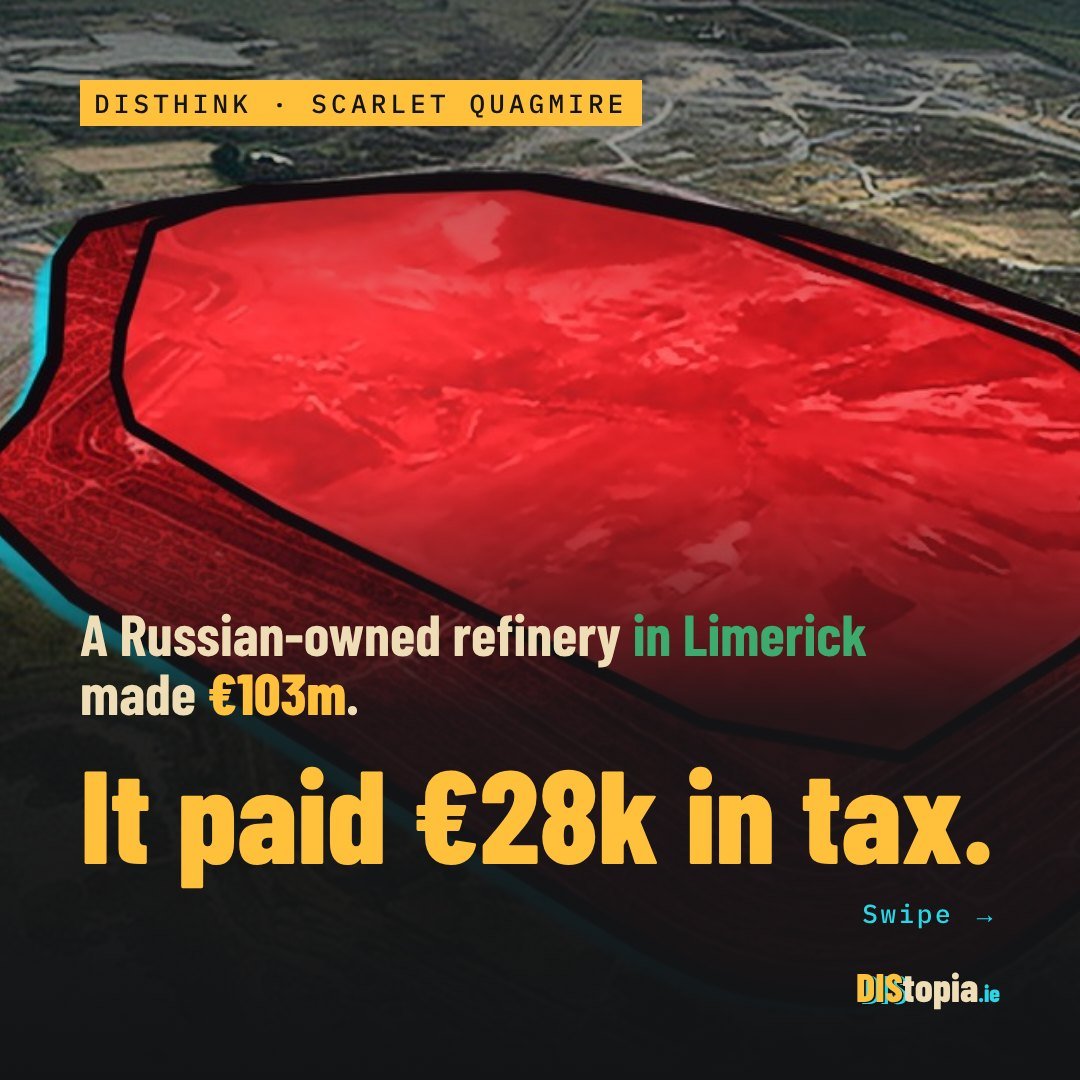
The jobs are real, and the families who depend on them matter. But beyond the wages, the state gets very little back: about €28,000 in tax on a €103 million profit.
And who's actually regulating a strategic, Russian-owned site, beyond the pollution? For decades, Brussels has set how many fish Irish trawlers can land.17 Surely it can make this plant say where its alumina ends up. If the EU took responsibility, the decision would be Europe's, not just ours, and Ireland wouldn't face Russia on its own.
We were told our principles were too expensive. The accounts say otherwise.
What if?
What if we used Aughinish for ourselves?
Turning alumina into aluminium takes enormous amounts of electricity, and Ireland has never had power cheap enough. That's why the alumina sails away. But offshore wind could change that. Wind-powered Irish aluminium could go into the power cables, window frames and cans we already import.
The red mud could become cement and bricks for the homes we keep being promised.
The plant's alumina hydrate could make the chemicals that clean our drinking water.
And if sanctions ever do land, the state could step in and run the plant itself, as an Irish asset rather than a Russian one.
None of this is easy.
But right now, Russia gets boatloads of alumina, and we're left with their crimson mud.
The story in six slides
Swipe through, then share them or save one. Made for Instagram, free to repost with a link back.
How this article was made: who did what, me or AI, and how it was checked.
Read the DIStudent version: the same story told neutrally, with economics explainers for students.
Sources
My sources are presented below.
- Aughinish Alumina Ltd, EPA Schedule E report for 2024 (IE Licence P0035-07), March 2025. leap.epa.ie
- Limerick Alumina Refining Ltd, directors' report and financial statements, year ended 31 Dec 2024 (CRO no. 231248). Available from the Companies Registration Office.
- Associated Press, "Ireland faces pressure to stop sending Russia an ingredient vital to its war on Ukraine", 12 Nov 2026. washingtontimes.com
- Ireland–Ukraine relations. Wikipedia
- Central Statistics Office, Arrivals from Ukraine in Ireland, Series 20. cso.ie
- Aughinish Alumina. Wikipedia
- "Irish Refinery's Alumina Exports to Russia Spark Calls for EU Sanctions". aroundprague.cz
- The Irish Times, "Some alumina from Aughinish 'undoubtedly' supplies Russian military, EU envoy says", 23 Oct 2026. irishtimes.com
- EBSCO Research Starters, "League of Nations Applies Economic Sanctions Against Italy". ebsco.com
- Abyssinia Crisis. Wikipedia
- The Irish Times, "Apple's €13bn Irish tax case timeline", 10 Sep 2024. irishtimes.com
- The Irish Times, "EU sanctions on Russian-owned Aughinish Alumina would be 'self-defeating', says Taoiseach", 29 May 2026. irishtimes.com
- Aughinish Alumina Ltd, directors' report and financial statements, year ended 31 Dec 2023 (CRO no. 59982). Available from the Companies Registration Office.
- University of Oxford, "1935 Sanctions Against Italy: Would Coal and Crude Oil Have Made a Difference?", economic history working paper. nuffield.ox.ac.uk
- The Irish Times, "'Irish Times' poll: Majority support appeal of Apple ruling", October 2016. irishtimes.com
- European Commission, "Import and export bans", EU sanctions against Russia. commission.europa.eu
- European Commission Representation in Ireland, "Facts and figures on the impact of EU membership on Ireland's fisheries", 6 June 2024. ireland.representation.ec.europa.eu
- Irish Examiner, "Aughinish sanctions could hurt Europe more than Russia, Taoiseach warns", May 2026. irishexaminer.com
- RTÉ News, Taoiseach and Tánaiste on Aughinish Alumina sanctions, 29 May 2026. rte.ie
- Irish Examiner, "Sanctions on Aughinish Alumina could impact Ireland's electricity grid, minister warns", 17 June 2026. irishexaminer.com
Photo credits: Red mud ponds by Graham Horn, Geograph Ireland, CC BY-SA 2.0; the edited version is shared under the same licence. Haile Selassie at the League of Nations, 1936, Bettmann Archive, public domain, via World History Encyclopedia. Micheál Martin and Volodymyr Zelensky in Kyiv, 2022, President.gov.ua, CC BY 4.0, cropped.